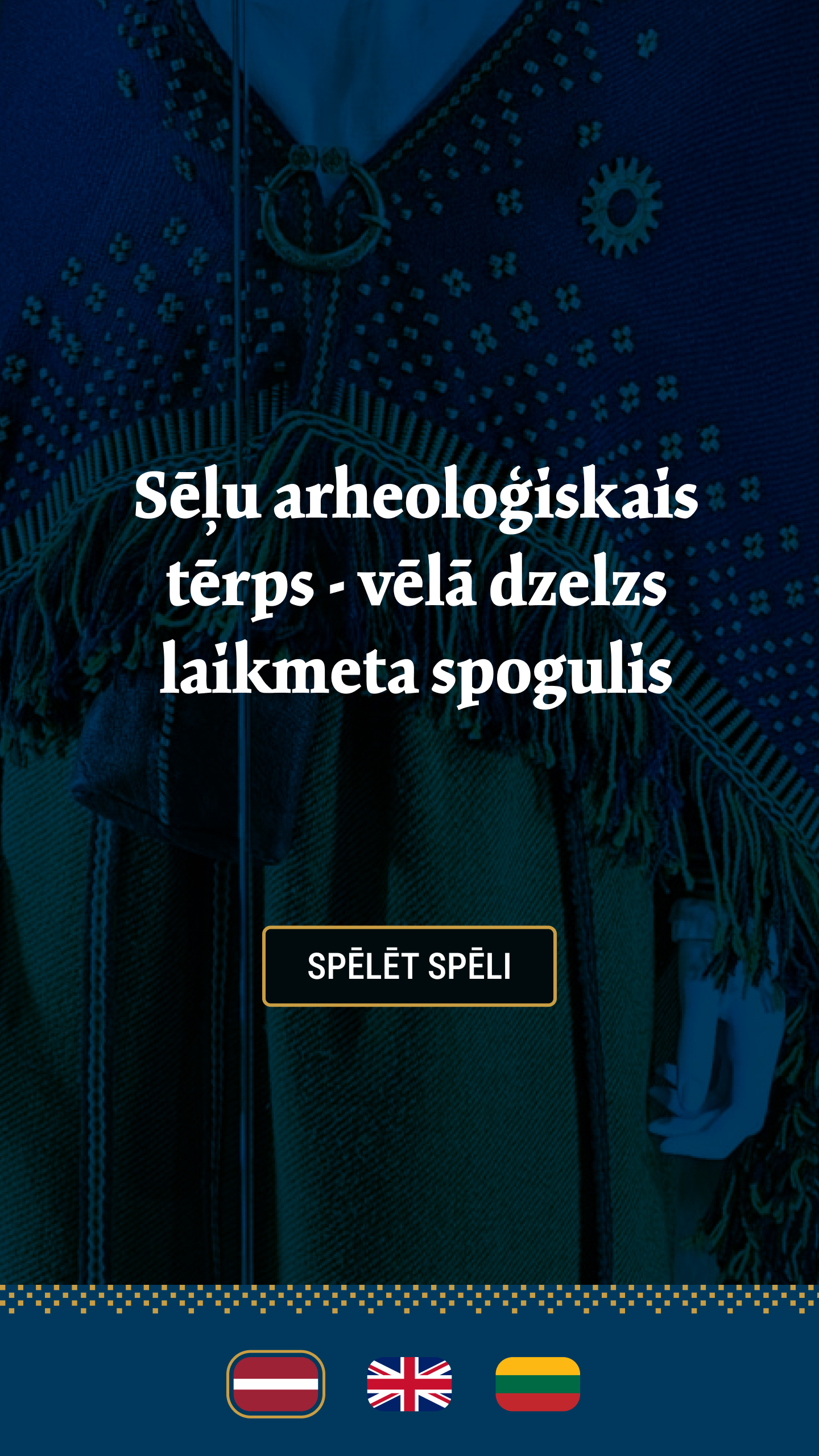
Museum Exhibit: Interactive Game “Selonian Folk Costume”
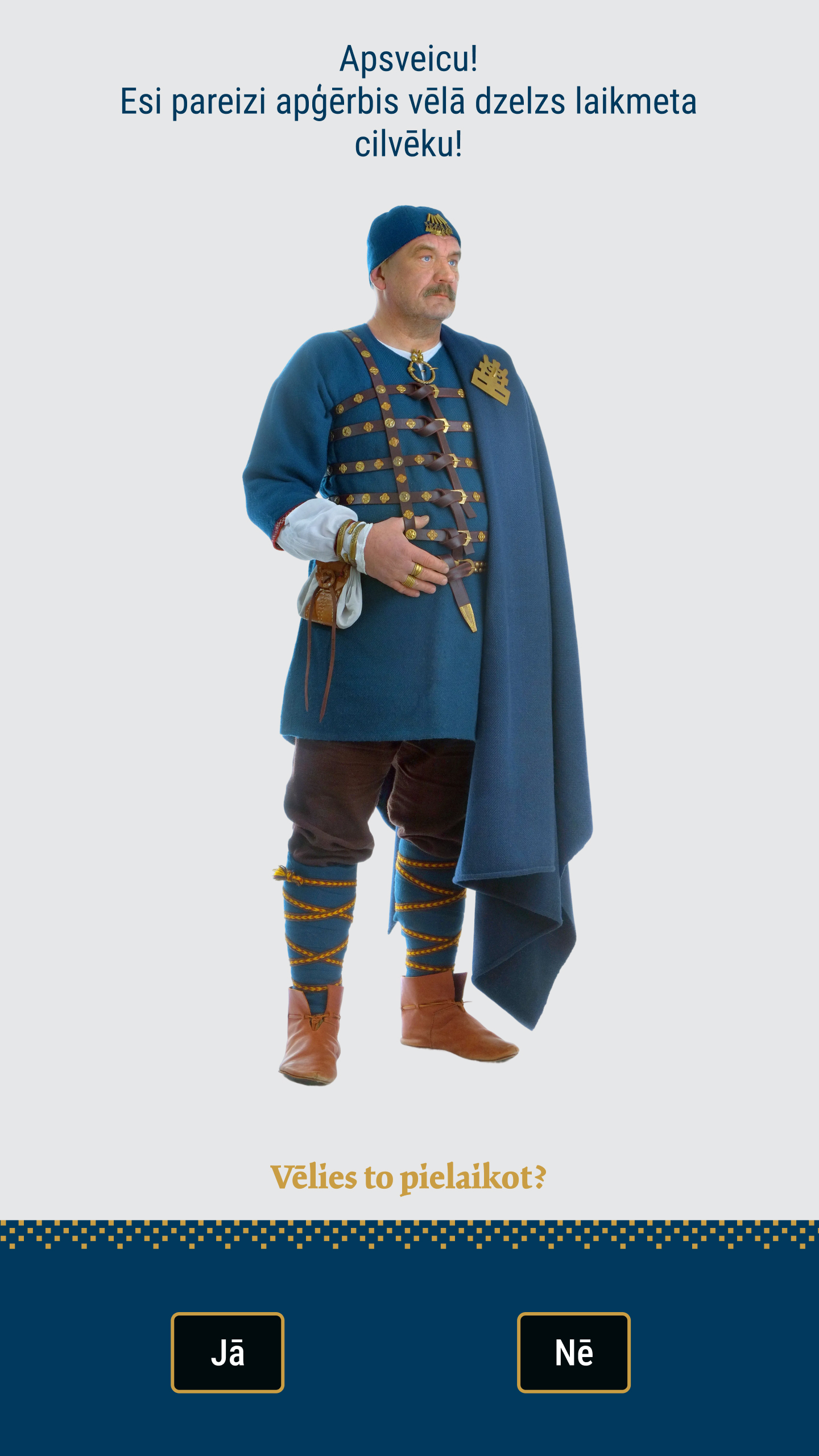
This museum exhibit was developed for the Selonian Farmstead exposition at Krustpils Museum. It introduces visitors to 12th-century folk costumes found during archaeological excavations at the Sēlpils Lejasdopeļi burial site. This museum exhibit combines educational content with hands-on experience, making it ideal for school groups and individual visitors alike.
How Does This Museum Exhibit Work?
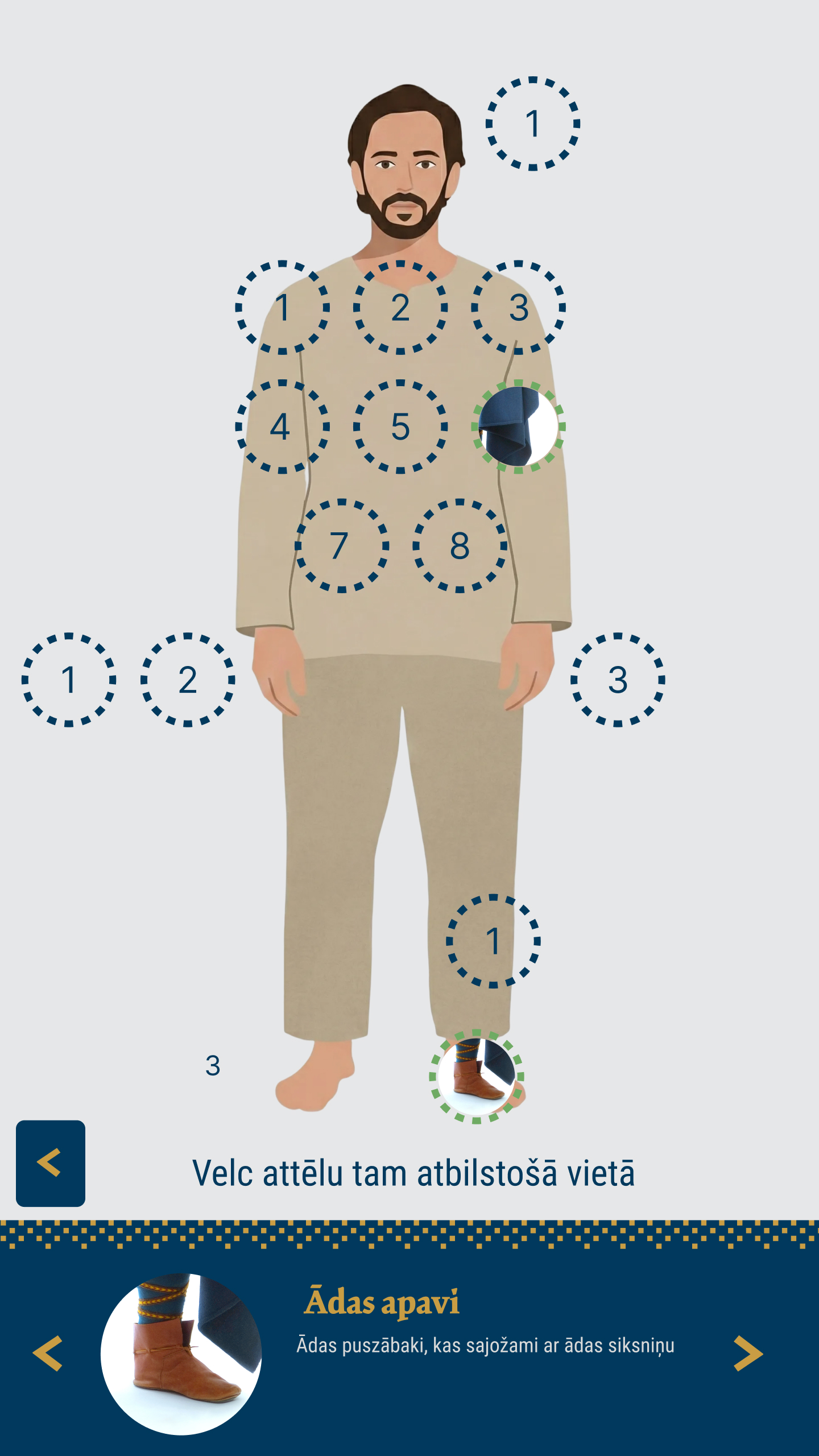
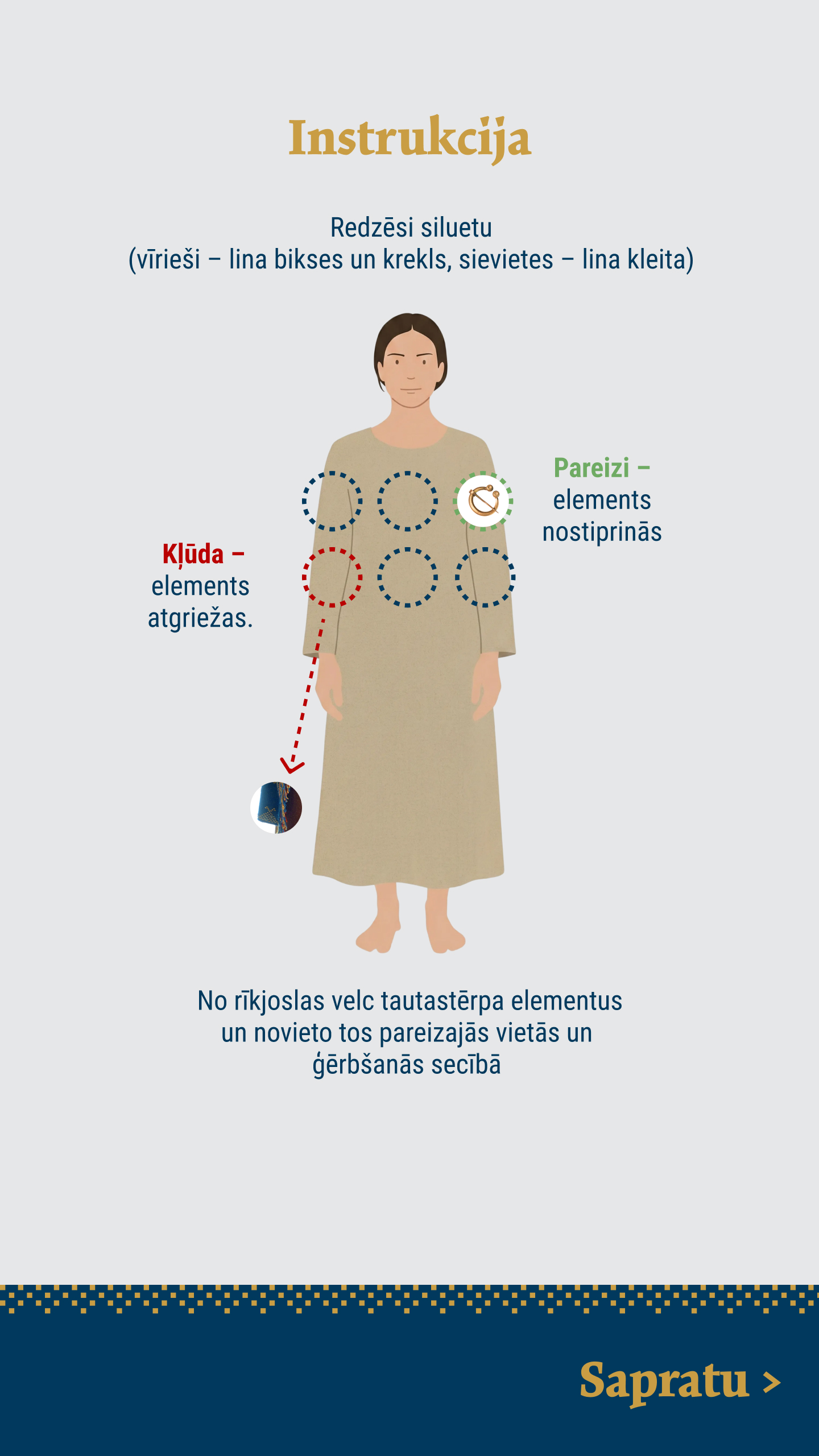
The experience is built on a simple drag-and-drop mechanic. Step by step, the user assembles a men’s or women’s archaeological folk costume by placing each element in the correct position. Each costume component includes expert-prepared information about its historical significance and function in everyday life. The user must think carefully about which piece goes where — making the learning process active rather than passive. As a result, this museum exhibit becomes an effective learning tool for school excursions and independent visitors of all ages.
AR Camera: Try On the Folk Costume Virtually
After completing the game, visitors use the camera to see themselves wearing the folk costume in real time — an augmented reality (AR) experience. This creates a personal and emotionally engaging moment that stays with the visitor long after leaving the museum. The feature is particularly popular with children and families, as it turns a historical topic into something fun and tangible. Furthermore, it encourages visitors to spend more time at the exposition and share their experience with others.
Museum Exhibit Available in Multiple Languages
This museum exhibit is available in multiple languages. Therefore, it is fully accessible to international visitors — with no language barrier. This is especially important for museums in regions that attract tourists from abroad. Multilingual support ensures that the educational value of the exhibit reaches the widest possible audience.
Why Digital Museum Exhibits Matter
Traditional museum displays are valuable — but today’s visitors, especially younger generations, expect more than passive observation. Interactive digital solutions help museums stay relevant, increase visitor engagement, and improve how information is retained. Research shows that hands-on learning significantly improves memory and understanding compared to reading a label on a wall.